
 English
 Cebuano
 Chinese (Simplified)
 Chinese (Traditional)
 Filipino
 Hawaiian
 Japanese
 Spanish
Published on August 31, 2026
Case: Carlos v. People of the Philippines (G.R. No. 277047, En Banc, Gaerlan, J.)
In bouncing check litigation, procedure is often as important as substance. A case can collapse not because of weak evidence, but because a party claims they were never properly notified. The Supreme Court has now modernized this space, recognizing electronic service as a valid mode of serving notices of dishonor, provided safeguards are in place.
What happened in plain terms:
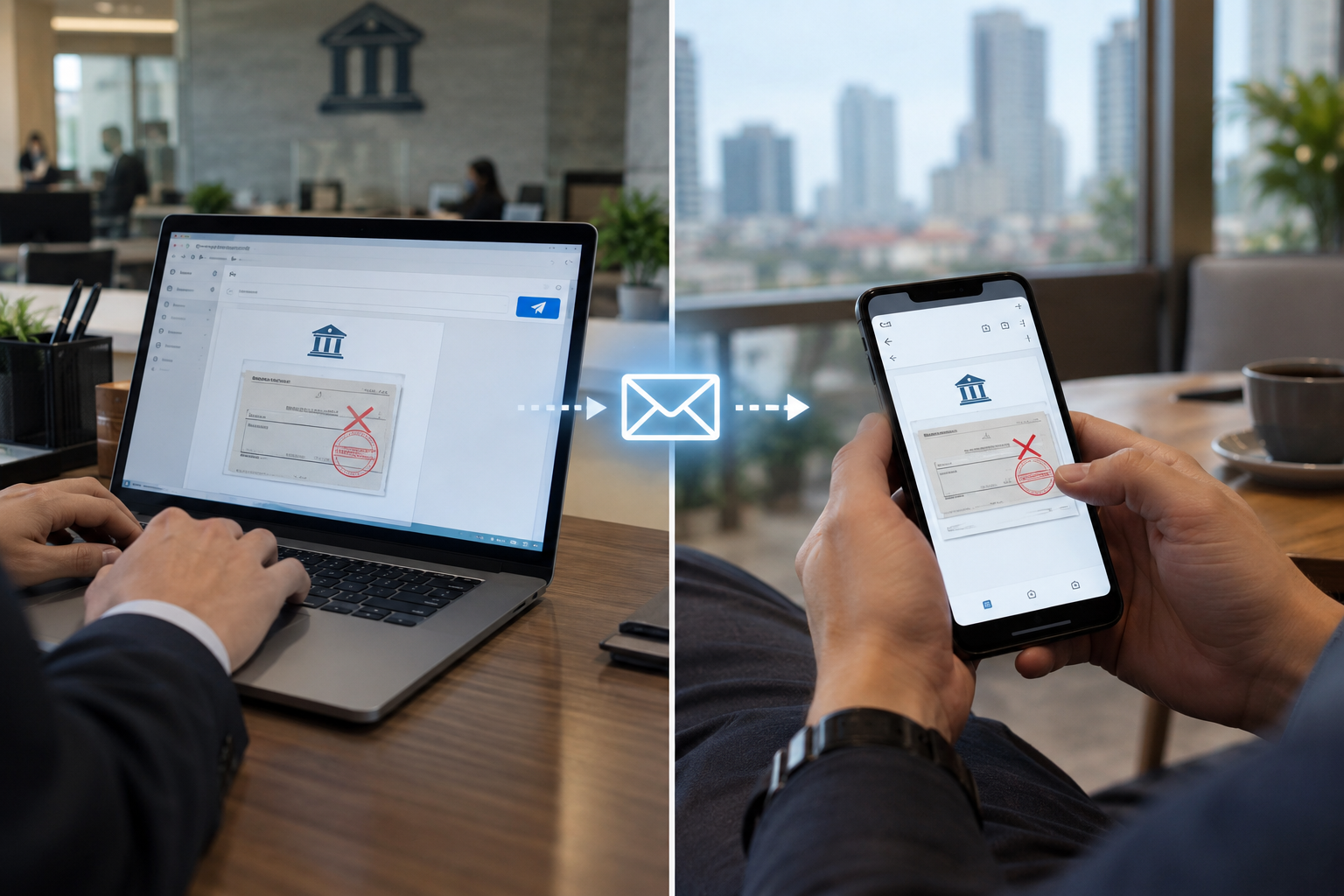
The issue involved the proper service of the notice of dishonor required under Batas Pambansa Blg. 22 or the Anti Bouncing Check Law. The dispute focused on whether electronic service, such as email or digital communication, can validly replace traditional physical service.
The core ruling you need to remember:
The Supreme Court ruled that electronic service of a notice of dishonor is valid in BP 22 cases. However, it is not automatic. The party serving the notice must still prove that the notice was reliably transmitted and that safeguards exist to show receipt or at least verifiable delivery. The Court is effectively balancing modernization with evidentiary reliability.
Practical playbook for clients:
- For creditors and complainants
- Digitize your notice process properly
Email, messaging platforms, and electronic delivery can be used, but they must be backed by proof such as delivery receipts, read confirmations, or system logs. - Do not abandon physical service entirely
Hybrid service is still the safest approach. Physical delivery remains strong evidence in court. - Standardize templates and protocols
Use consistent notice formats, timestamps, and documented sending procedures to avoid credibility issues later.
- For the accused or respondents
-
- Scrutinize the authenticity of electronic notices
Check if the sender can actually prove delivery, receipt, or reliable transmission. - Challenge gaps in chain of proof
Missing logs, unclear timestamps, or unverifiable accounts can weaken the prosecution’s case. - Preserve your own communication records
Your inbox, phone logs, and messages can become key defensive evidence.
- Scrutinize the authenticity of electronic notices
The takeaway:
The Supreme Court is signaling controlled modernization. Electronic service is now part of the legal toolkit in BP 22 cases, but it is not a free pass. The burden remains on the sender to prove that notice was real, reliable, and provable in court.
Disclaimer:
The contents of this website are for general information and educational purposes only and do not constitute legal advice. No attorney-client relationship is formed by using this site. We strive for accuracy, but we cannot guarantee that the information is always up-to-date or error-free.
Use of this site and its contents is at your own risk. This website and its authors disclaim any liability for any loss or damage, whether direct, indirect, incidental, consequential, or otherwise, arising from the use or misuse of the information provided on this website.
For specific legal advice, please consult our law firm: CONTACT US